Featured Work
Intel Corporation
Shaping the Narrative: Responsible AI & Deepfake Detection
Senior Corporate Communications & PR Manager, Global Corporate Communications
Opportunity
Deepfakes were becoming a real and growing public concern. Intel was developing technology to detect them in real time, but the story hadn't been told yet. The opportunity was to take that technology and translate it into a compelling narrative that could position Intel as a leader in responsible AI.
My Approach
As part of a broader Responsible AI communications strategy I developed for Intel, I identified FakeCatcher as a defining proof point. I went deep with the research team to understand the technology and what made it different, then translated that complexity into a clear, resonant story that advanced Intel's leadership in responsible AI. I led the end-to-end global PR campaign, developing all press materials, preparing spokespeople, and directing regional PR leads to take the story global simultaneously across multiple markets.
Impact
The story broke through in mainstream, trade, and technical press simultaneously, reaching a wide and diverse audience, strengthening the company's authority and credibility and leadership positioning.
Earned Coverage Highlights

New York Times
Another Side of the A.I. Boom: Detecting What A.I. Makes

Wall Street Journal
Is It Human or AI? New Tools Help You Spot the Bots

Fast Company
How Intel Is Putting Its AI Processors to Work Detecting Deepfakes
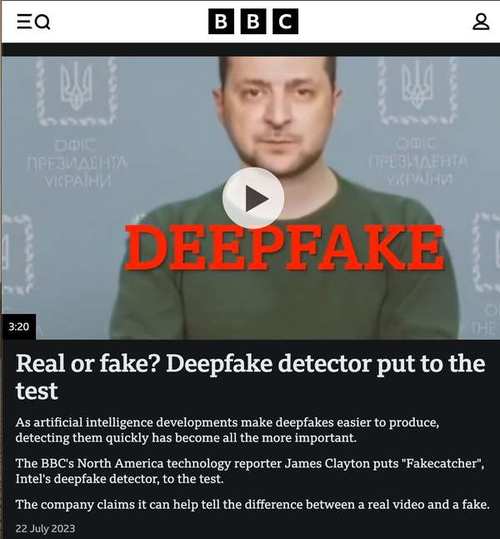
BBC News
Real or Fake? Deepfake Detector Put to the Test

Associated Press
One Tech Tip: How to Spot AI-Generated Deepfake Images
ZDNet
Intel's New Deepfake Detector

MIT Technology Review
Creating and Sharing Generative AI Responsibly
The Economist
How Technology Can Fight Digital Fakery
Notable mention
Bill Gates cited Intel's FakeCatcher in his GatesNotes blog as a key example of AI being used to fight AI-generated misinformation. Read the post → Additional coverage in VentureBeat, AI Business, HPCwire, Gizmodo, and more.
Awards & Recognition


Podcasts
The story reached beyond mainstream press into technical and research communities through podcasts and a live X Spaces conversation.